
Ready for Anything: A Homeowner's Preparedness ChecklistSeptember is National Preparedness Month, and this year's theme from FEMA's Ready campaign is Americans Stand Ready — the idea that

Dated: August 25 2026
Views: 144
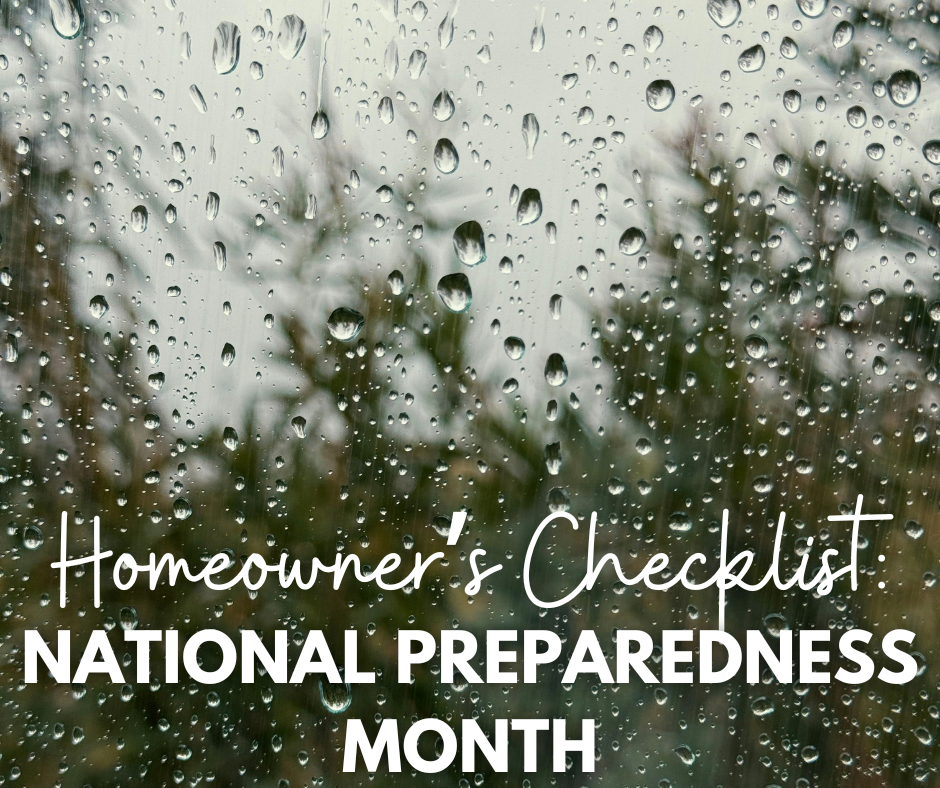
September is National Preparedness Month, and this year's theme from FEMA's Ready campaign is Americans Stand Ready — the idea that preparedness starts at home, with people looking out for their own families and neighbors.
It's a good reminder, because most of us are less ready than we think. Not because we don't care, but because "get prepared" sounds like a weekend project, and weekends fill up fast.
So here's the honest version: most of what matters here takes about 30 minutes. Not a full kit, not a bunker — just the handful of things that make a bad day significantly less bad.
Before you buy anything or build a kit, do twenty minutes of research on your own area. Four places to look:
By the end, you should be able to name the two or three events most likely to affect homes in your market, and roughly what they cost last time.
Knowing what's likely only helps if you find out it's happening. Most people assume they'll get a heads-up automatically, and that's only partly true.
There are a few systems worth understanding, and they don't all work the same way:
Ready.gov's alerts page has the full rundown if you want to go deeper.
This is the single highest-value item on the list, and almost nobody does it.
Go find three things right now:
A burst pipe becomes a small problem or a catastrophic one depending entirely on whether you can find the valve in the dark.
If you had to leave the house in ten minutes, what would you need to rebuild your life afterward?
That last one is worth more than people realize. Walk through your house narrating what you own. It takes ten minutes on your phone, and it is by far the easiest way to substantiate an insurance claim later. Store a copy in the cloud, not just on the device.
Two things surprise homeowners constantly:
Flood damage is not covered by standard homeowners insurance. It requires a separate policy, and there's typically a 30-day waiting period before it takes effect — which means buying it during a storm forecast doesn't help.
Replacement cost and market value are different numbers. If construction costs in your area have climbed since you bought your policy, your coverage may not rebuild your house.
One phone call. Ask both questions.
The standard guidance is three days of supplies. Aim for that, and skip the survival-store aesthetic:
Keep it in one place, in something you can carry.
Where does the household meet if you can't get back into the house? Who is the out-of-town contact everyone calls if local lines are jammed? Does each family member have the key numbers written down somewhere that isn't a phone?
Ten minutes at dinner covers this. It's the step that makes all the others work.
If you only do one thing this month, sign up for your county's alert system — it takes about two minutes and it's the step that gives you time to use everything else. Then go find your water shutoff and do the walkthrough video. All three together run about fifteen minutes and cover an outsized share of what actually goes wrong in a home.
Preparedness isn't about expecting disaster. It's about not having to think clearly under pressure, because you already did the thinking.
Ready for Anything: A Homeowner's Preparedness ChecklistSeptember is National Preparedness Month, and this year's theme from FEMA's Ready campaign is Americans Stand Ready — the idea that
How to Host Game Day Without Missing the GameFootball is back, which means the next few months of weekends just got claimed — and the season is long enough that hosting duty lands on you at
Everyone Needs a Third Place. Here's How to Find YoursThere's a term that sociologists have used for decades that's suddenly everywhere: the third place. The concept is simple. The first place is
Building the Perfect Entryway for Back to SchoolSummer has a way of taking over the house. Pool bags pile up by the door, sunscreen and sunglasses colonize every flat surface, and nobody quite
Should you require assistance in navigating our website or searching for real estate, please contact our offices at 770-240-2001.
Atlanta Communities - Corporate Office
3113 Roswell Road - Suite 101
Marietta, GA 30062
Phone: 770-240-2001
Fax: 770-240-5401
Privacy Policy: Data will not be sold or shared with third parties for promotional or marketing purposes.

 ©2026 Georgia Multiple Listing Service All information deemed reliable but not guaranteed. All properties are subject to prior sale, change or withdrawal. Neither listing broker(s) or information provider(s) shall be responsible for any typographical errors, misinformation, misprints and shall be held totally harmless. Listing(s) information is provided for consumer's personal, non-commercial use and may not be used for any purpose other than to identify prospective properties consumers may
be interested in purchasing. The data relating to real estate for sale on this website comes in part from the Internet Data Exchange program of the Multiple Listing Service. Real estate listings held by brokerage firms other than Atlanta Communities Real Estate Brokerage may be marked with the Internet Data Exchange logo and detailed information about those properties will include the name of the listing broker(s) when required by the MLS. Copyright ©2026 All rights reserved.
Last Updated: September 9, 2026 5:33 PM UTC
Show More...
©2026 Georgia Multiple Listing Service All information deemed reliable but not guaranteed. All properties are subject to prior sale, change or withdrawal. Neither listing broker(s) or information provider(s) shall be responsible for any typographical errors, misinformation, misprints and shall be held totally harmless. Listing(s) information is provided for consumer's personal, non-commercial use and may not be used for any purpose other than to identify prospective properties consumers may
be interested in purchasing. The data relating to real estate for sale on this website comes in part from the Internet Data Exchange program of the Multiple Listing Service. Real estate listings held by brokerage firms other than Atlanta Communities Real Estate Brokerage may be marked with the Internet Data Exchange logo and detailed information about those properties will include the name of the listing broker(s) when required by the MLS. Copyright ©2026 All rights reserved.
Last Updated: September 9, 2026 5:33 PM UTC
Show More...
 Listings identified with the FMLS IDX logo come from FMLS and are held by brokerage firms other than the owner of this website. The listing brokerage is identified in any listing details. Information is deemed reliable but is not guaranteed. If you believe any FMLS listing contains material that infringes your copyrighted work please click here to review our DMCA policy and learn how to submit a takedown request. © 2026 First Multiple Listing Service, Inc.
Data Last Updated on: September 9, 2026 5:34 PM UTC Please contact insiderealestate.com if you experience any technical issues.
Listings identified with the FMLS IDX logo come from FMLS and are held by brokerage firms other than the owner of this website. The listing brokerage is identified in any listing details. Information is deemed reliable but is not guaranteed. If you believe any FMLS listing contains material that infringes your copyrighted work please click here to review our DMCA policy and learn how to submit a takedown request. © 2026 First Multiple Listing Service, Inc.
Data Last Updated on: September 9, 2026 5:34 PM UTC Please contact insiderealestate.com if you experience any technical issues.
 Northeast Georgia Board of REALTORS® All information deemed reliable but not guaranteed. All properties are subject to prior sale, change or withdrawal. Neither listing broker(s) or information provider(s) shall be responsible for any typographical errors, misinformation, misprints and shall be held totally harmless. Listing(s) information is provided for consumer's personal, non-commercial use and may not be used for any purpose other than to identify prospective properties consumers may be
interested in purchasing. The data relating to real estate for sale on this website comes in part from the Internet Data Exchange program of the Multiple Listing Service. Real estate listings held by brokerage firms other than Atlanta Communities Real Estate Brokerage may be marked with the Internet Data Exchange logo and detailed information about those properties will include the name of the listing broker(s) when required by the MLS. Copyright ©2026 All rights reserved.
Last Updated: September 9, 2026 5:40 PM UTC
Show More...
Northeast Georgia Board of REALTORS® All information deemed reliable but not guaranteed. All properties are subject to prior sale, change or withdrawal. Neither listing broker(s) or information provider(s) shall be responsible for any typographical errors, misinformation, misprints and shall be held totally harmless. Listing(s) information is provided for consumer's personal, non-commercial use and may not be used for any purpose other than to identify prospective properties consumers may be
interested in purchasing. The data relating to real estate for sale on this website comes in part from the Internet Data Exchange program of the Multiple Listing Service. Real estate listings held by brokerage firms other than Atlanta Communities Real Estate Brokerage may be marked with the Internet Data Exchange logo and detailed information about those properties will include the name of the listing broker(s) when required by the MLS. Copyright ©2026 All rights reserved.
Last Updated: September 9, 2026 5:40 PM UTC
Show More...
 Athens Area Association of REALTORS® All information deemed reliable but not guaranteed. All properties are subject to prior sale, change or withdrawal. Neither listing broker(s) or information provider(s) shall be responsible for any typographical errors, misinformation, misprints and shall be held totally harmless. Listing(s) information is provided for consumer's personal, non-commercial use and may not be used for any purpose other than to identify prospective properties consumers may be
interested in purchasing. The data relating to real estate for sale on this website comes in part from the Internet Data Exchange program of the Multiple Listing Service. Real estate listings held by brokerage firms other than Atlanta Communities Real Estate Brokerage may be marked with the Internet Data Exchange logo and detailed information about those properties will include the name of the listing broker(s) when required by the MLS. Copyright ©2026 All rights reserved.
Last Updated: September 9, 2026 5:38 PM UTC
Show More...
Athens Area Association of REALTORS® All information deemed reliable but not guaranteed. All properties are subject to prior sale, change or withdrawal. Neither listing broker(s) or information provider(s) shall be responsible for any typographical errors, misinformation, misprints and shall be held totally harmless. Listing(s) information is provided for consumer's personal, non-commercial use and may not be used for any purpose other than to identify prospective properties consumers may be
interested in purchasing. The data relating to real estate for sale on this website comes in part from the Internet Data Exchange program of the Multiple Listing Service. Real estate listings held by brokerage firms other than Atlanta Communities Real Estate Brokerage may be marked with the Internet Data Exchange logo and detailed information about those properties will include the name of the listing broker(s) when required by the MLS. Copyright ©2026 All rights reserved.
Last Updated: September 9, 2026 5:38 PM UTC
Show More...
 © 2026 Lake Country GA MLS. All rights reserved. The data relating to real estate for sale on this web site comes in part from the Internet Data Exchange Program of LCGAMLS. Information provided is deemed reliable but not guaranteed. Data last updated: September 9, 2026 5:32 PM UTC .
